Technical  Schematics for rust protection?

Currently reading:
Technical  Schematics for rust protection?

Joined
Apr 28, 2019
Messages
53
Points
62
Hi

Do anyone know where I can find schematics for rust protection?
Like the one they use at Pava and Dinitrol.
I am planning to treat my old Panda with corrosion oile in the internal frame and since I am doing this myself I was wondering if anyone know where I can find schematics how to do it right.

Cheers
 
How would you know anything like that will actually cover the whole job? You need a few replacement bungs for chassis cavities (originals will probably tear) and an endoscope camera. USB type that work with a smartphone are dirt cheap.
 
I doubt one exists

the panels are depending where they are galvanized, sealed, stove enamel, lacquered. Designed to 8 years.

you will have to work one out for yourself I think
 
you will have to work one out for yourself I think
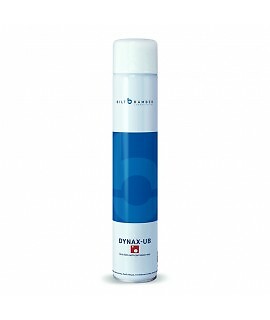
Yes I agree. I just buy a few cans of Bilt Hamber and spray it like mad willynilly using the probe it comes with.
 
This post contains eBay links which may earn a commission at no additional cost to you.
Start at one corner and remove the first bung. Insert camera. Spray sealant and use camera to check its all covered. Using knowledge from that cavity, move to the next and repeat around the whole car. HHIB?
 
Thanks guys.

Both the endoscope and the rubberplugs are already in my stash of Panda parts.

@DaveMcT
What does HHIB means?
I made a quick search of the web and the following answers was:

Heinrich Hertz Institut Berlin

Hilton Head Island Beach

...and none of those answers seemed to give any meaning ;)
 
I'd be very interested if you do find a schematic, @Muddur
The areas I've rust-proofed are:
  • Rear axle
  • Oil sump pan
  • Coolant return pipe
  • Mud trap behind front springs
  • Sills through rubber bungs in A & B pillar and rear wheel arch
    Screenshot 2022-04-19 185242.jpg
The B pillar cavity seems to be sealed off from the rest of the sill - the rust treatment I put through hole B is still sitting in there, whilst it drained through the drain holes in the sills from holes A & C.
I jacked up the car to encourage the treatment to run towards the middle of the sill.
I like the cavity wax treatment linked to by fourbie above - I've used Dinitrol in the past too - and the straw should be long enough to reach the end of each sill section.
But if anyone knows of other potential rust-spots it would be great to know.
I live by the coast and I'm used to having cars rust around me.
The Panda is amazingly good in this regards, but I'd like to give her the best chances of survival:)
 
The inner wings** around suspension towers and where outer wings bolt on (** fenders to non Brits).

The front subframe inside and out. It's thick metal but it also gets hammered with grit and dirt.

All bolts which run right through. Many get corroded on the pointy end making them tough to extract. The issue is especially a problem with alloy parts (gearbox alternator etc)
 
I'd be very interested if you do find a schematic, @Muddur
The areas I've rust-proofed are:
  • Rear axle
  • Oil sump pan
  • Coolant return pipe
  • Mud trap behind front springs
  • Sills through rubber bungs in A & B pillar and rear wheel arch
    View attachment 404934
The B pillar cavity seems to be sealed off from the rest of the sill - the rust treatment I put through hole B is still sitting in there, whilst it drained through the drain holes in the sills from holes A & C.
I jacked up the car to encourage the treatment to run towards the middle of the sill.
I like the cavity wax treatment linked to by fourbie above - I've used Dinitrol in the past too - and the straw should be long enough to reach the end of each sill section.
But if anyone knows of other potential rust-spots it would be great to know.
I live by the coast and I'm used to having cars rust around me.
The Panda is amazingly good in this regards, but I'd like to give her the best chances of survival:)

Super!
Thanks for adding the picture.
The mudtrap was something I discovered right after I bought the car, during a spring/damper replacement,


BTW:
As a member of Danish motorist organization (FDM) I was offered free corrosion/rust check of my Panda today.

In their report they recommended that I get done rust work at the rear-wheel. Same place as where you placed the "C".
They also told me that the rear axel needs to be replaced within the next two years.
The left rear springs was broken.
Both issues was sort of expected. I was aware of the rust in right left side, but the left side was a surprise.

There is a rust corrosion spot I want to point out on the 2-wheel drive version;
The bump stops on the rear axel!
The "cups" which the rear axel springs are centered around.
These have a nast tendency to rust away, especially the one on the side toward the pavement ('Sidewalk' for those of you who don't know English-English ;) ).
These cups are not in the sparepart catalouge. They are part of the frame. The chassi part can be ordered but replacement will require a lot of work. We replaced those on my GF Panda a few weeks ago, but it was a custom job 😣 Had to be hand made.
So if you do see rust on them, give the some attention immidiately!!!
 
Stress corrosion causes the rear axle cups to fail at the vertical rim about 20mm inboard of the weld to the main swing arm. Front usually goes first. The weak area can be welded, but aftermarket axles are so cheap and replacement so easy there's no point.

During 2019, I had my 100HP axle grit blasted and hot zinc metal sprayed for £80. Hot dipped is even better and probably no more cost. However, a new axle is now £120.

I cut the rubber brake hose at end of underbody metal pipe. Avoids damage to the metal pipe from seized flare nuts. Then ran braided lines from there to the brake. It's more reliable and has no effect on brake feel. If you want racing feel brakes replace the fronts as well. Get lots of grommets fitted by the line maker so you can avoid any chafing.

The Fiat 500 axle has an integral anti roll bar and softer springs. It improves handling and ride but costs a few £ more. However it cannot be used on 100HP or 4x4 as it widens the axle by >20 mm each side. I did this on a Dynamic and four years later can say it's well worth doing for the better ride alone.
 
The Fiat 500 axle has an integral anti roll bar and softer springs. It improves handling and ride but costs a few £ more. However it cannot be used on 100HP or 4x4 as it widens the axle by >20 mm each side. I did this on a Dynamic and four years later can say it's well worth doing for the better ride alone.
why ?

the correct width part which is cheaply available for a standard Panda, and easily modified to fit the 100hp

nobody would fit 25mm each side on the rears of any front WD hatch and take it for a spin on a track day,
 
why ?

the correct width part which is cheaply available for a standard Panda, and easily modified to fit the 100hp

nobody would fit 25mm each side on the rears of any front WD hatch and take it for a spin on a track day,

Any
Stress corrosion causes the rear axle cups to fail at the vertical rim about 20mm inboard of the weld to the main swing arm. Front usually goes first. The weak area can be welded, but aftermarket axles are so cheap and replacement so easy there's no point.

During 2019, I had my 100HP axle grit blasted and hot zinc metal sprayed for £80. Hot dipped is even better and probably no more cost. However, a new axle is now £120.

I cut the rubber brake hose at end of underbody metal pipe. Avoids damage to the metal pipe from seized flare nuts. Then ran braided lines from there to the brake. It's more reliable and has no effect on brake feel. If you want racing feel brakes replace the fronts as well. Get lots of grommets fitted by the line maker so you can avoid any chafing.

The Fiat 500 axle has an integral anti roll bar and softer springs. It improves handling and ride but costs a few £ more. However it cannot be used on 100HP or 4x4 as it widens the axle by >20 mm each side. I did this on a Dynamic and four years later can say it's well worth doing for the better ride alone.

Seen from a rider perspective this seems good, but any change which makes the wheels extend outside the wheelwell will affect fuel economy in a visible way on a 1.1 and 1.2 L.
Seen from a 100HP this might be neglicble and I suspect that the 100HP has increased side skirts to handle the 15" rims
with a wider ETC; Which basically negates this issue
 
Any


Seen from a rider perspective this seems good, but any change which makes the wheels extend outside the wheelwell will affect fuel economy in a visible way on a 1.1 and 1.2 L.
Seen from a 100HP this might be neglicble and I suspect that the 100HP has increased side skirts to handle the 15" rims
with a wider ETC; Which basically negates this issue
heres how I see it

a side effect of a wider rear axle is less weight transfer at the rear and increased in understeer

a side effect of the rear wheel no longer following the dry line left by the front wheel is an increase change of aquaplaning in heavy rain

because it "feels" better does not make it a safe modification. Anyhow you would have to inform you insurance company of the modification and they will normally add around 25%.

Its pointless to suggest to others to put the wrong axle width in when the correct part is available cheaply

in my opinion its not a Good idea to push forward unproven suspension modifications. That doesn't mean it been fitted and "feels" okay. But proper tested in all situation with the data from telemetry to back it up.
 
Last edited:
why ?

the correct width part which is cheaply available for a standard Panda, and easily modified to fit the 100hp

nobody would fit 25mm each side on the rears of any front WD hatch and take it for a spin on a track day,
My words are perfectly clear. The job was done 4 years ago when aftermarket rear axles were not available. HOWEVER for the extra cost of the 500 axle over 169 axle, you get MUCH better handling and ride. Purists scoff and complain about the wider track, but the car handles and rides way better than any other Panda if been in. The mod is worth doing for that reason alone.

I would love to take on a track vs a standard 169. It would out-handle anything on standard 169 suspension.
 
My words are perfectly clear. The job was done 4 years ago when aftermarket rear axles were not available. HOWEVER for the extra cost of the 500 axle over 169 axle, you get MUCH better handling and ride. Purists scoff and complain about the wider track, but the car handles and rides way better than any other Panda if been in. The mod is worth doing for that reason alone.

I would love to take on a track vs a standard 169. It would out-handle anything on standard 169 suspension.

If I drove the poop out of my 169, it woulden't keep together very long and would end at the breaker :cool:
During my many hours working on the car I found that the previous owners have not been kind in ANY way.
Like changing the oil and oilfilter.
I know 95% of the hidden kinks and weakness and the car hold togther/run becourse I don't take the car to the limit.
I have no doubt that a well keept 169 with few mods could drive a lot better, but in the end a 100 HP would be a better and economic choice.
The 169 is my daily driver. Its bought to be cheap, easy to repair, practical and comfortable; So it is fit for purpose.
If I had a job, my choice of car would be different, but I wishes where horses.... ;)
 
If I drove the **** out of my 169, it woulden't keep together very long and would end at the breaker :cool:
During my many hours working on the car I found that the previous owners have not been kind in ANY way.
Like changing the oil and oilfilter.
I know 95% of the hidden kinks and weakness and the car hold togther/run becourse I don't take the car to the limit.
I have no doubt that a well keept 169 with few mods could drive a lot better, but in the end a 100 HP would be a better and economic choice.
The 169 is my daily driver. Its bought to be cheap, easy to repair, practical and comfortable; So it is fit for purpose.
If I had a job, my choice of car would be different, but I wishes where horses.... ;)
not needed, you dont want to see which is the fastest accelerating car or best driver. Gets expensive FIA helmet, insurance and fees

the negative effect of widening the rear axle of a front wheel drive car is well known and proved many times, Especially in a short wheel base.

What you need to push the car close to or past its normal grip limit, constant speed followed by a sharp cornering is all thats needed

just need some cones and flat ground, you would have to run the same tyres on both cars

I know a farmer with part of an old concrete airfield on his land no doubt he would be up for letting us uses it.
 
Back
Top