Technical  Cooked wiring loom.

Currently reading:
Technical  Cooked wiring loom.

Joined
Jan 23, 2026
Messages
23
Points
93
Location
Dumfries and Galloway
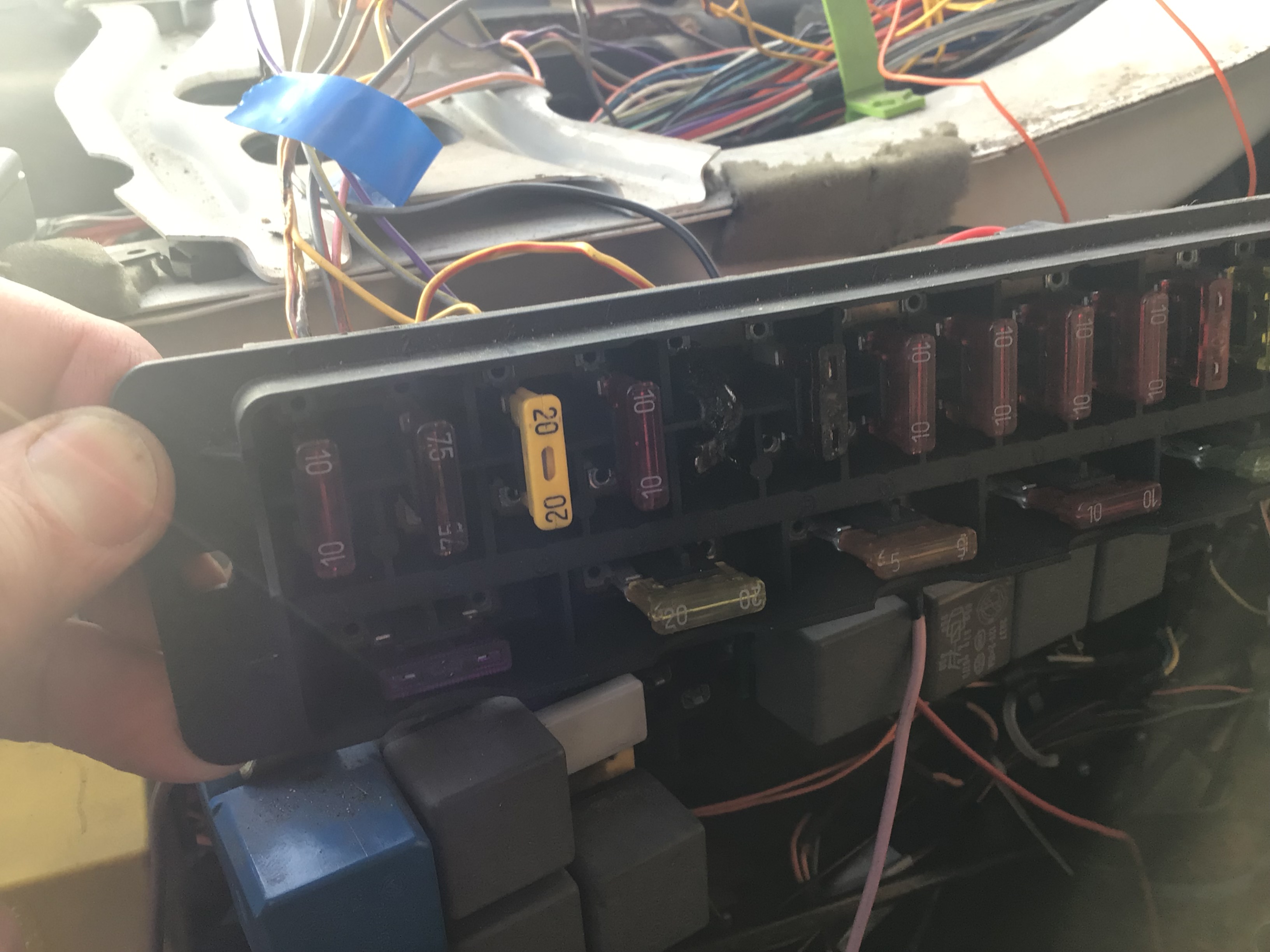
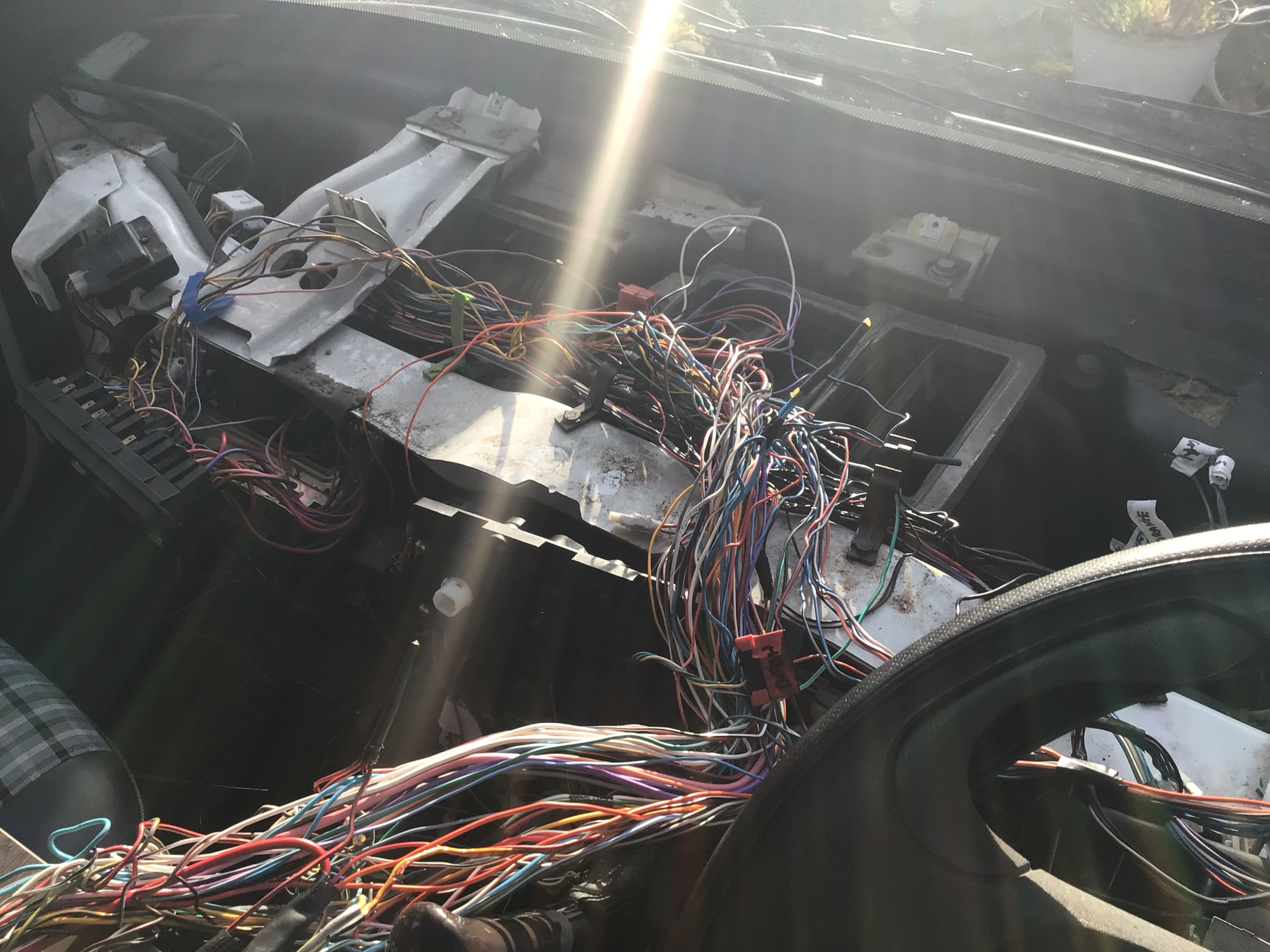
Help!!!! Morag, our motorhome has cooked her wiring loom. the fuses on the sidelights have melted and having spent the best part of the day taking the dash to bits, the wiring loom between the ignition and the glovebox fuse box looks shot. I hoped that I could just run a few new wires but it looks like the whole thing needs replacing.
Although a 1998 model she is too good to scrap, has just had a new clutch and some bodywork done. She is a 2.8 idtd with a good strong engine. Does anyone know if I can get a new/ second hand loom? Also, does anyone know of any auto electric engineers in Dumfries and Galloway/ South West Scotland area who may be able to help?Can anyone help?
IMG_1188.jpeg
IMG_1187.jpeg
IMG_1186.jpeg
.
 
Model
Fiat Ducato maxi 2.8idtd
Year
1998

Attachments

  • IMG_1185.jpeg
    IMG_1185.jpeg
    1.3 MB · Views: 35
Solution
My battery is in good condition according to the charger, the volt meter and the green light in the battery. It was new last autumn. I gave it another go and checked that power going through the jump leads and power across the terminals. I tried the negative jump leads on the negative terminal and on the casing but there is still absolutely nothing from the starter motor itself…. very perplexing.
The trouble with wiring loom fires/shorting it always goes much further than you first think, it happens in seconds and it isn't just the wires that short it is the ones laying against the shorted ones that have their insulation melted also.
The damage can take many hours of a skilled auto electrician at high labour costs, so a bit of a nightmare.:(
Re a second hand loom, just guessing but it may be a Peugeot Boxer or Citroen Relay of the same age and engine configuration if still available for a 28 year old vehicle, generally it is only the Motor Homes that are still around as all the working vans will have been replaced by now.
One small thing in it's favour is I assume it is pre ECU (computer) although will still have some form of immobiliser at the injector pump.
 
The trouble with wiring loom fires/shorting it always goes much further than you first think, it happens in seconds and it isn't just the wires that short it is the ones laying against the shorted ones that have their insulation melted also.
The damage can take many hours of a skilled auto electrician at high labour costs, so a bit of a nightmare.:(
Re a second hand loom, just guessing but it may be a Peugeot Boxer or Citroen Relay of the same age and engine configuration if still available for a 28 year old vehicle, generally it is only the Motor Homes that are still around as all the working vans will have been replaced by now.
One small thing in it's favour is I assume it is pre ECU (computer) although will still have some form of immobiliser at the injector pump.
 
Can you trace the cause and where those wires went all the way?
If you can localise the damage to some extent it may help.
Try not to just rip out everything, it will frighten any prospective electricians, most professionals tend not to like taking on a job after someone else has been there.:)
I am assuming the battery is disconnected now?;)
If hopefully you get to a point of testing circuits etc. may I suggest a lowish amperage fuse between battery and everything else, until you get to testing the starter side of course.
Incidentally, I have just thought if being a MotorHome you have auxiliary leisure battery and split circuity charging or Zig unit, I suggest that is disconnected and tested before any final test.
Lots of photos and notes before removing parts to record what goes where.
 
Can you trace the cause and where those wires went all the way?
If you can localise the damage to some extent it may help.
Try not to just rip out everything, it will frighten any prospective electricians, most professionals tend not to like taking on a job after someone else has been there.:)
I am assuming the battery is disconnected now?;)
If hopefully you get to a point of testing circuits etc. may I suggest a lowish amperage fuse between battery and everything else, until you get to testing the starter side of course.
Incidentally, I have just thought if being a MotorHome you have auxiliary leisure battery and split circuity charging or Zig unit, I suggest that is disconnected and tested before any final test.
Lots of photos and notes before removing parts to record what goes where.
Battery and 2 leisure batteries disconnected. I think the main flashpoint was the fuse box as the sidelights fuse has melted. The wires have melted the ones laying alongside. I was hoping to just replace damaged wires but so many seem to be damaged I’m not sure I can. Having looked at it I’m surprised the whole thing didn’t go up.
 
Battery and 2 leisure batteries disconnected. I think the main flashpoint was the fuse box as the sidelights fuse has melted. The wires have melted the ones laying alongside. I was hoping to just replace damaged wires but so many seem to be damaged I’m not sure I can. Having looked at it I’m surprised the whole thing didn’t go up.
As I said with electrical fires it is very quick how much damage can be done.:(
 
Due my wife's medical problems I am currently having to act as her chauffeur. Yesterday I sat in during her hair dressing session.
The hairdresser has a converted Transit PVC, and I mentioned this thread in conversation.
This elicited the info that there is a company offering to build wiring harnesses for any vehicle. I believe that Ebay was also mentioned as being where the company advertised. I could be wrong as the conversation was rather disjointed.
 
Well, after a few months and having located a spare loom from Kiev I have finally changed the affected wires. At the same time I have removed the heated mirrors and wires relating to stereo system as this was rubbish and we tend to use a stand alone Bose speaker and Spotify or talking book app when travelling. I have also disconnected the reversing noise bleep thing as this didn’t work and was an after market addition. A broken after market alarm Has also been removed.
The mechanical immobiliser was removed some time ago and I tend to use a crook lock and keep everything out of sight.
Having tested the circuits, all the lights, the horn Etc now work.
However, when I turn the ignition to on the key code light comes on and stays on and the fuel warmer doesn’t light up. The engine does not even attempt to turn over. In fact I’m met with silence. There is possibly a quiet click from the fuse/ solenoid box in the glove compartment but I’m not certain about that.
Any thoughts welcome. Should I investigate the starter motor? Could the amber key code lighthave anything to do with it even though immobiliser removed?
 
Well, after a few months and having located a spare loom from Kiev I have finally changed the affected wires. At the same time I have removed the heated mirrors and wires relating to stereo system as this was rubbish and we tend to use a stand alone Bose speaker and Spotify or talking book app when travelling. I have also disconnected the reversing noise bleep thing as this didn’t work and was an after market addition. A broken after market alarm Has also been removed.
The mechanical immobiliser was removed some time ago and I tend to use a crook lock and keep everything out of sight.
Having tested the circuits, all the lights, the horn Etc now work.
However, when I turn the ignition to on the key code light comes on and stays on and the fuel warmer doesn’t light up. The engine does not even attempt to turn over. In fact I’m met with silence. There is possibly a quiet click from the fuse/ solenoid box in the glove compartment but I’m not certain about that.
Any thoughts welcome. Should I investigate the starter motor? Could the amber key code lighthave anything to do with it even though immobiliser removed?
When you say the immobilser was removed can you give detail as at that age of 2.8 it may have an electrical immobiliser behind a shields on the injector pump depending on which model you have.
However apart from that the engine should still turn over , just not start.
 
Hello, thanks for reply. The imobiliser was attached to something, maybe it was the injector pump but I can’t quite remember the detail as it was about three years ago. It had a little toggle, which had to be pressed against some electrical thing before the key was turned. If I remember correctly, it was encased on the side of something and was removed with a hacksaw. I think it wasn’t quite as crude as that sounds but basically that’s what happened. 😳
 
Hello, thanks for reply. The imobiliser was attached to something, maybe it was the injector pump but I can’t quite remember the detail as it was about three years ago. It had a little toggle, which had to be pressed against some electrical thing before the key was turned. If I remember correctly, it was encased on the side of something and was removed with a hacksaw. I think it wasn’t quite as crude as that sounds but basically that’s what happened. 😳
From what you say it sounds like the fuel shut off solenoid on the end of the injector pump is now being fed with power to open it directly, this is the most simple way and as long as that solenoid is working (usually it will make a slight click when it opens) then fuel should get to the injectors and the engine will start. It should also mean any imobiliser lights flashing are not going to prevent engine from starting.
One other point is what draws the fuel to the injector pump, on older engines they had a mechanical lift pump on the top in front of the injector pump, but I suspect on yours it will be an electric pump in the fuel tank, so when you turn the ignition on you should hear a slight noise from the tank and then shut off as it reaches pressure, filling the fuel filter etc.
Note none of this will help if as you say the engine is not actually turning over so first, is the battery fully charged, in good condition and are all the main earth and starter leads in good order, next you are looking at the signal from the ignition switch to the starter solenoid, so if any fault still in the wiring inside the cab, that is next to check.
If you simply wanted to start the engine then a jump lead from the live side of battery to the solenoid on the starter will turn the engine over and with this warm weather no other heating/coldstart device will be needed assuming the primer pump in the tank is sending fuel to the high pressure pump on the engine.
 
I agree that the presence of key code warning light should have no effect on the engine starting, if the immobiliser has been removed from the injection pump. I think that the 2.8idTD used the same code receiver as on my 2.8jtd. It is a small box under the steering column, with two connectors. To remove the unwanted warning light, remove the larger of the two connectors on the code receiver.

The Ducato 230 had a starter relay under the dash, electrically interposed between the ignition switch and the starter solenoid. In my opinion that was a good feature. It may help if it is noted that the relay was denoted by a red holder. See attached diagram.
 

Attachments

  • x230 Starting & Charging.pdf
    169.5 KB · Views: 19
Hello again. I’ve battled the heat and tested the starter relay under the dash and it appears to be working fine. I’ve also tested the solenoid on the starter motor and this appears to be working too.
I’ve not bypassed everything yet using a jump lead. I am I right in thinking that I attach one end of the lead to the positive solenoid terminal on the starter solenoid and the other to the positive battery terminal. Would this start the engine without the ignition switched on with the key?

When I turn on the ignition, various dash lights including the battery light illuminate so I presume the ignition switched on with and alternator are working.
 
Hello again. I’ve battled the heat and tested the starter relay under the dash and it appears to be working fine. I’ve also tested the solenoid on the starter motor and this appears to be working too.
I’ve not bypassed everything yet using a jump lead. I am I right in thinking that I attach one end of the lead to the positive solenoid terminal on the starter solenoid and the other to the positive battery terminal. Would this start the engine without the ignition switched on with the key?

When I turn on the ignition, various dash lights including the battery light illuminate so I presume the ignition switched on with and alternator are working.
On the starter solenoid usually there is the main heavy starter lead from the battery positive and a smaller wire that should trigger the solenoid, if that wire had battery positive to it it should turn the engine over , but it will not start if the ignition is off, normally.:)
I use the word normally as I understand you have had some "slight " wiring issues, so basically van in neutral, hand brake on and just flick the wire across the positive battery terminal and engine should crank until you release it.
Given your wiring issues I advise the main earth lead on battery is on but not tight so if anything bad happens you can pull it off quickly.:)
Assuming all wiring is OK and lights come up on ignition as normal engine should fire up.
 
Also, I have noticed that this wire appears to have disappeared as I have changed the wires. It could have been a mistake but I was so careful of getting it wrong I double and triple checked everything. It was attached to the glow plug fuse.
 

Attachments

  • IMG_1193.jpeg
    IMG_1193.jpeg
    917 KB · Views: 13
Back
Top